Theme 01
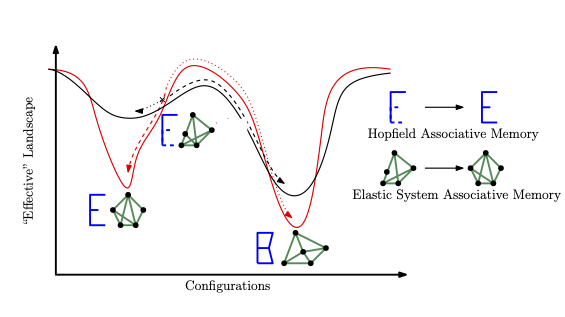
Adaptation & Information Storage in Materials
We study how physical systems can store, retrieve, and process information through their material properties. Using ideas from Hopfield networks and associative memory, we explore how non-equilibrium dynamics can enhance memory capacity in elastic and disordered systems.
Theme 02
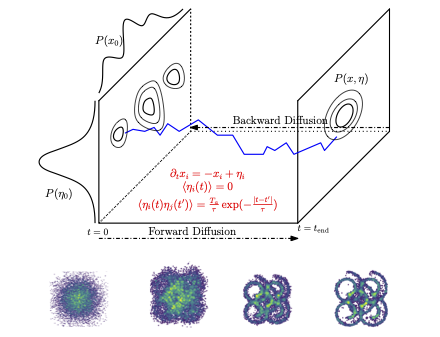
AI & Non-Equilibrium Statistical Mechanics
We explore deep connections between modern AI architectures and non-equilibrium physics. Our work shows how score-based generative diffusion can be enhanced by active noise sources, how chemical reaction networks can perform in-context learning, and how ideas from statistical mechanics illuminate the design of machine learning algorithms.
Theme 03
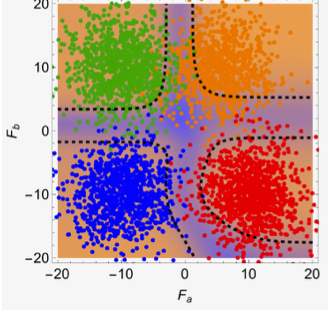
Biological Information Processing
We investigate how cells make decisions and process information using the language of non-equilibrium statistical mechanics. Our work spans from understanding bursty transcriptional dynamics to predicting genome-wide perturbation outcomes, connecting single-molecule data to cell-state transitions.
Theme 04
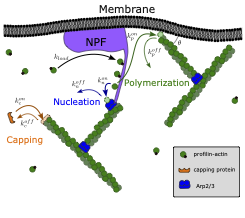
Self-Assembly Far from Equilibrium
We develop thermodynamic design principles for understanding and controlling self-assembly in driven systems. Our work establishes fundamental bounds connecting energy dissipation to the structures and phases that emerge when systems are driven away from thermal equilibrium.
Theme 05
Learning Cytoskeletal Dynamics
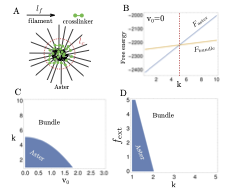
We study how cytoskeletal networks—the structural scaffolding of cells—learn and adapt through mechanical feedback and active processes. Our work reveals how activity enables transitions between contractile and extensile states, and how mechanosensitivity enables a form of physical learning.
Theme 06
Non-Equilibrium Soft Matter
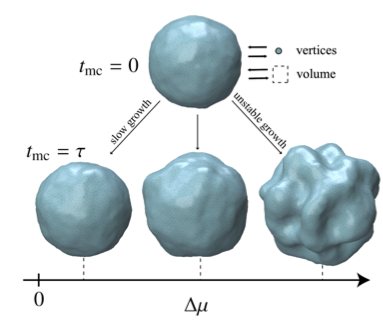
We engineer new transport properties and phase transitions in active and driven soft matter systems. Our work spans odd viscosity in chiral fluids, topological modes in dissipative systems, and rectification of energy in parity-violating metamaterials.